 |
| New beginnings |
 |
| Night Swan's rocking chair |
 |
| Abandonment |
 |
| Cottonwood Tree |
|
| New beginnings |
|
| Night Swan's rocking chair |
|
| Abandonment |
|
| Cottonwood Tree |

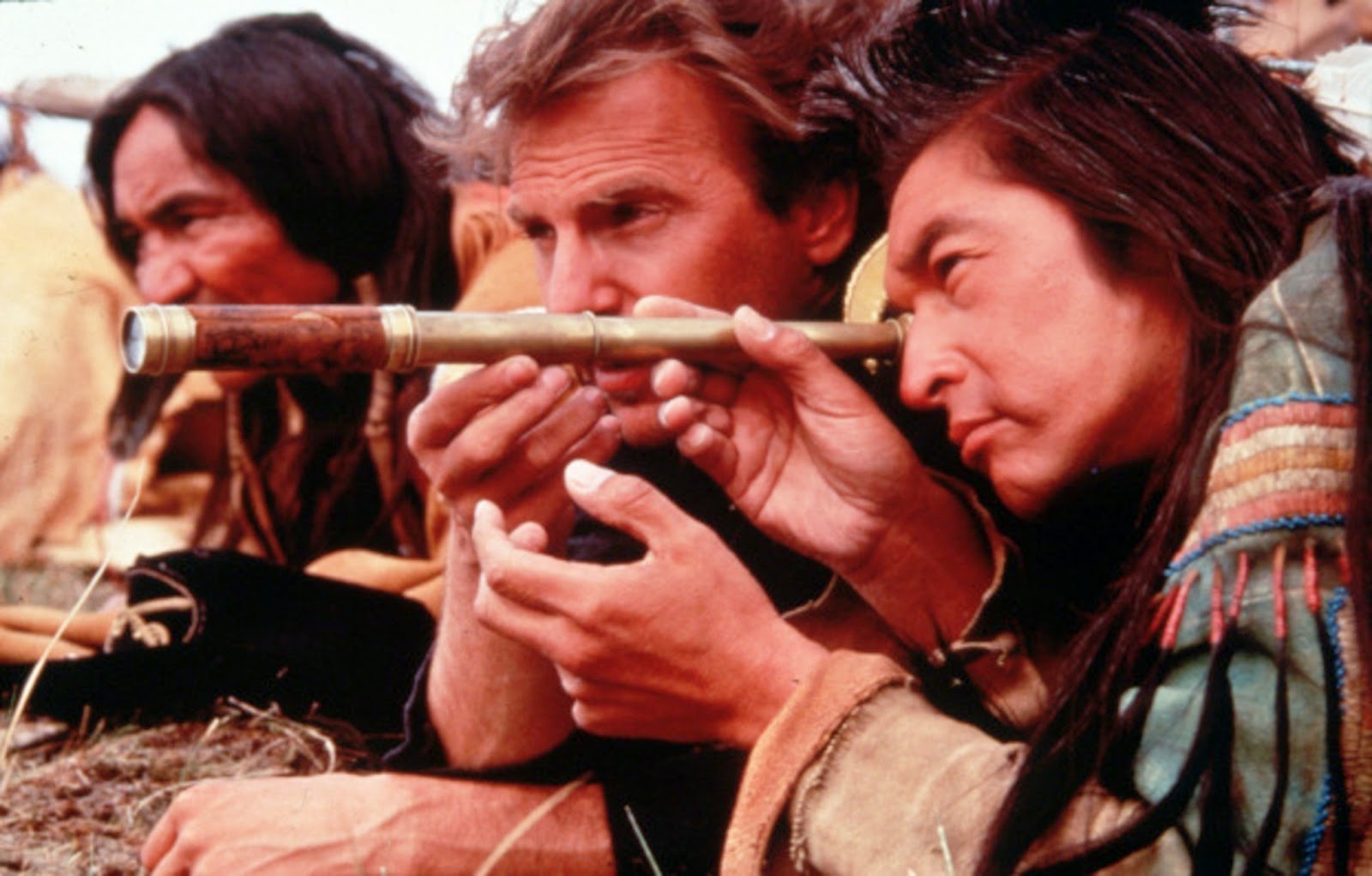 In many films, Native Americans have developed certain stereotypes that are found to be untrue and in the 1990's people started to finally recognize them as more humanlike. In films including Reel Injun, Iron Eyes Cody, The Cowboy, and even cartoon shows including Pocahontas that all portray false stereotypes and representing them in all the wrong ways. In films like these, Native Americans appear to live on reservations and dressed in a warrior like outfit to evoke the daily style of an average Native. By the makings of these targeted films on the Native Americans, people have become very racist towards them making fun of their languages, clothing, where they live, etc. Dances With Wolves and Little Big Man were two of the first films to start the non stereotype and taking the time to learn the Native's culture. "The Natives were fleshed out as characters and allowed to be see as more complete people, they weren't just warriors, they weren't just peaceful"(Reel Injun). In Dances With Wolves Native's weren't seen as their usual selves but more humanlike and after this film were released they finally were excepted as regular people. Although the Native's weren't in the spotlight they thought of it as progress for finally getting recognition for who they actually are as a person. On of the main characters in Dances With Wolves known as Graham Greene had to learn the language of the Lakota. Films before this one, Native actors would make up the Native's languages giving people the wrong impression to what the languages really sounded like. Even when this movie came out there were still false recognition to some Native nations. As Russell Means says, "To treat my nation like we don't know how to fight...we the Lakota, who are responsible for first nation to ever militarily defeat the United States of America on the field of battle and the Lawrence on the plains have to teach us how to fight" (Reel Injun). Although Dances With Wolves showed people a different side to Native Americans, Means was offended when he saw his own nation being shown as a nation that didn't know how to fight. Like all Native nations they all need to know how to fight but by giving the audience a different prospective on their ability to do things.
 Flags of Our Fathers another stereotype was recognized to be known as another Native American stereotype. Adam Beach a character from the film produced in 2006 played a drunkin' Native. As Adam said, "Ira Hayes was consumed by alcohol. I myself can't even attempt to drink one in a crowd because there's another drunk Indian. I've always called myself a child of an alcoholic so throughout the film you watch it that's me, that's not acting"(Reel Injun). This film has given Natives a new characteristic that they get drunk and so they will usually not drink in front of crowds fearing the judgement they will get from others. The results that are shown from this film is the insecurity about their ability to do what they want without being judged so they tend to not do it. "We don't always have to make great representations of Native people, were not asking for that, were not asking to be nobles or righteous or good all the time, were asking to be human"(Reel Injun). It has progressed throughout the years that Indians are becoming for humanized now that films today are becoming more and more realistic. Mostly all of the things stated in movies on Native Americans they are mostly likely to be misleading to viewers watching it. Today as more movies get produced about Indians the more practical people get about Natives and how they are just like everyone else.
 A relationship can have different meanings to them whether it's a good one or not. In The Ceremony Tayo and his Aunt have an abnormal relationship with each other. Auntie being a controlling oldest daughter of her family tries to take care of her household while at the same time tries to be a motherly like figure to Tayo. Although Tayo and Auntie are family members and since Tayo is Native American and Auntie is a strong christian it causes some problems with their relationship. "Those who measured life by counting the crosses would not count her sacrifies for Rocky the way they counted her sacrifices for her dead sister's half-breed child"(Silko 27). Auntie being as christian as she says she is comes across not so christian like the way she acts with Tayo. As she says "half-breed child" she is de-humanizing Tayo and putting him in a dog or animal like form which explains how Auntie acts and speaks towards Tayo. Auntie is described as a problematic character that causes a lot of trouble throughout Tayo's life. When Tayo comes home from World War II Auntie tries to be loving and caring towards him. "... and he realized then she changed the beds as if Josiah and Rocky still slept there, tucking the dark wool blankets around the corners of the clean sheets, stuffing the pillows into starched white pillowcases she had ironed the day before"(Silko 28). This quote describes the relationship between Rocky and Auntie and comparing it to the relationship with her and Tayo's. By Auntie setting up the bed and making everything look perfect is a way of showing that her relationship with Tayo is good but in reality it's not so good on the inside. It's if the only way Auntie can control the way things look as perfect but can't do anything to get rid of the appearance of Tayo being present in her life. She's comparing Tayo as a stain in a shirt that can never be removed and having to deal with the consequences forever. "All that gossip about Josiah and about Little Sister, Girls around here have babies by white men all the time now, and nobody says anything. Men run around with with Mexicans, and even worse, and nothing is ever said"(Silko 30). This was shown as an example of transferred oppression. As in Auntie is getting so anger with the different cultured relationships growing around her that she's pushing her anger onto Tayo and targeting his Native American culture.
 When one chooses to go to war they have to deal with the consequences of wearing a certain uniform. They are given the privilege to be treated with respect by fighting for other's lives. When Tayo and his cousin Rocky were fighting in World War II they wore American uniforms. Everyone around them recognized them as regular American soldiers but didn't recognize that they both were Native Americans behind the uniforms. "The war was over, the uniform was gone. All of a sudden that man at the store waits on you last, makes you wait until all the white people bought what they wanted. And the white lady at the bus depot, she's real careful now not to touch your hand when she counts out your change"(Silko 39). When the war was over they weren't treated with the same respect they were treated while in the war. People didn't care about who they once were. When the uniforms weren't worn by them anymore they didn't get recognized the same. In Dance With Wolves First Lieutenant Dunbar wore a uniform when he faced the Sioux Nation and they acknowledged him in a different way than they would if he weren't wearing his uniform. "The first day in Oakland he and Rocky walked down the street together and a big Chrysler stopped in the street and an old white woman rolled down the window and said, "God bless you, God bless you," but it was the uniform, not them, she blessed"(Silko 38). The old women didn't notice the race in which the men were only the country that they represented and that changed the way she acknowledge them. It's interesting to observe the actions people make to an American soldier dressed in uniform to a regular American man or woman when roaming the streets because it would probably relate to when Tayo and Rocky got noticed. Today, people easily acknowledge soldiers dressed in uniform and treat them with more respect than a usual American. Recognizing and thanking those soldiers for what they achieve greatly is a heroic thing but at the same time should always give respect to the people who deserve it the most because of their race.
 Today, many go through a daily routine of trying to numb one's pain and emotions by doing something that's simply just blocks every memory from them for a certain amount of time. The effect that war gives on oneself comes off to be one of the most brutal and painful experiences one has ever dealt with. Many veterans try to forget about these specific emotions they have towards the war and the experiences but tends to stick with them forever. It's hard to let go of what happened in the past especially when seeing one get killed right before their very eyes. The post traumatic stress and depression tends to appear in every living veteran. In the book The Ceremony written by Leslie Silko several examples are shown throughout the first couple of pages the biggest way to get rid of those thoughts is to drink. "No, they say coffee is bad for you. He laughed, and Tayo smiled because Harley didn't use to like beer at all, and maybe this was something that was different about him now, after the war. He drank a lot of beer now"(Silko 18). Tayo and his childhood friend, Harley are veterans from World War II that have dealt with post traumatic stress for years. Tayo being a good friend that he always is to Harley tries to help Harley out with his addiction to alcohol from the outcome of the war. Before the war, Harley didn't use to like beer but since then the effect of him fighting in the war it left him with nothing but bad thoughts. "The sound of the rain got louder, pounding on the leaves, splashing into the ruts; it splattered on his head, and the sound echoed inside his skull"(Silko 11). This quote is an example of how often post traumatic stress can relate to the smallest of things. And how the thumping of rains drops can remind oneself about the bullets going off non stop. "It was all worse than he had ever dreamed: to have drifted all those months in white smoke, only to wake up again in the prison camp"(Silko 15). The white smoke was a western medicine made from plants that would help soldiers with their pain and help the process of their healing.
 Weather can change a mood in an instant such as raining can changes ones emotion to be sad or tired where as if it's sunny it make one feel happy and energetic. Different people act different ways according to the weather but every climate switches ones mood dramatically. In the book it starts off with a drought and how the dryness in Gallup Ceremonies has effected Tayo and all the rest of the people living there. The drought brings back the memories and flashbacks of fighting in the war and the reservation having a dry climate. "Jungle rain had no beginning or end; it grew like foliage from the sky, branching and arching to the earth, sometimes in solid thickets entangling the islands, and, other times, in tendrils of blue mist curling out of coastal clouds"(Silko 10). When rain pours after a drought its a happy thing. During a drought everything is very dry, dead, and yellow but when water comes it makes everything green and alive and turns the mood around. "...it was for dry air, dry as a hundred years squeezed out of yellow sand, air to dry out the oozing wounds of Rocky's leg, to let the torn flesh of broken bones breathe, to clear the sweat that filled Rocky's eyes"(Silko 10). The drought dried everything up. Although Rocky had died from the Japanese grenade the drought had helped him heal his wounds letting them dry up and letting his bones breathe. "...if they saw how weak Rocky had become, and came to crush his head with the butt of the rifle, then it would be the rain and the green all around that killed him"(Silko 10). Tayo had blamed the rain for the death of his friend Rocky and how the rain had made him sick and everyone else around him. Ever since Rocky's death in the rainfall Tayo has had a remembrance of the rain and the green nature surroundings that always triggers back to Rocky. Tayo's mood changes dramatically always coming back to a recognition to World War II.


 In the film Dances With Wolves, First lieutenant John J. Dunbar, a soldier who was badly wounded in the American Civil War decided he wanted to do something more with his life. Dances With Wolves triggered back to the 1860's where a lot of soldiers including Dunbar struggled with severe post-traumatic stress caused by awful experiences seen throughout the war. In a scene shown in the film, First Lieutenant Dunbar was severely injured choosing to try and commit suicide rather than have his leg amputated. During that scene with Dunbar riding his horse, he did a christ pose spreading his arms out wide being an easy target to shoot at. He had sacrificed his life ending up surviving his suicide riding through the Confederate front line he was awarded bravery for his appearance as well as picking his own military base in which he can store his supplies and giving him personal shelter. After settling down in at his new post in the western frontier he began to rebuild the abandoned loft. During his time at the post he would observe his thoughts into a daily dairy. Dunbar started questioning why other soldiers weren't joining him but he unfortunately didn't know that the wagon driver by the name of Timmons who took him to the frontier was killed by the native americans who came across him on his way back to Fort Hays. He would write in his dairy the reasoning why soldiers weren't coming but with the death of Timmons there was no one to tell them where Dunbar was. No help from Major Fambrough for committing suicide after awarding Dunbar for his bravery it prevented the soldiers into not knowing where Dunbar was located.
 The Pawnee Indians known to dress in ceremonial clothing were a violent tribe scalping their enemies as a symbol showing that they conquered them in which they did when they killed Timmons. Shortly before the killing of Timmons, a Sioux member known as Wind in His Hair found Dunbar at his post in which he tried stealing Dunbar's horse several times. The Wind in His Hair informed the rest of his tribes that there was an American living on their land and stating the fact that Americans don't appreciate anything they do or what they wear. Dunbar finally decided to go find the Sioux Tribe dressing in his uniform symbolizing civilization and preparation to fight. On his journey through the lands he came upon this women alone and hurt. In this scene it shows pathos where he is saving a women and how it makes him heroic. Usually holding the flag like he did when finding the women was expressing the power and dominance he had over everyone else on that land. He rapped the women's arm in the flag ripping it into pieces symbolizing that this wounded women is more important than his country's flag. These specific scenes in Dances With Wolves each have their own significance for symbolizing something so small that viewers wouldn't recognize.

 The Cherokee Nation was established in the early 1450’s and every since then they have been recognized for their cultural and social developments. They’re usually found in the eastern and southeastern regions of the United States which were actually the first to inhabit the location before it became present day states including North and South Carolina, Tennessee, Alabama, etc. Growing several crops including corn, beans, squash, along with sunflowers and crafting baskets and pottery are frequent hobbies that members do to stay active. Also known to be the one of the largest tribes throughout the world the Cherokee tribe consists of around 288,000 members and are divided into 7 clans who live in permanent villages along rivers and streams. John Ross was the first elected principal chief to lead the Cherokee Nation as well as the senate, and a house of representative. The first women to ever get voted in to be chief of the Cherokee Nation was Wilma Mankiller, a women who who was the principal chief from 1985 to 1995. Back when World War ll was in session Wilma’s mom, dad, and her 10 siblings were forced off of their land by the United States Army along with 45 other families in the tribe. Before dying from stage 4 metastatic pancreatic cancer on April 6, 2010, Wilma was an author who wrote a book about her being the leader of her nation.
  |
| Cherokee Nation's symbol |
 |
| Wilma Mankiller, first women Chief |
 |
| Cherokee Nation's flag |


 |
| Earl Old Person, a lifetime chief and hall of fame of Montana |
 |
| Blackfoot Nation's flag/symbol |
 |
| Traditional Sun Dance |

 The Cheyenne tribe who is located in the Great Plains which is now known to be the states Wyoming, Colorado, Nebraska, etc. In the early 1830’s the tribe is split into two separate groups due to American relocation one becoming the northern Cheyenne living in Montana and the southern Cheyenne living in Oklahoma. The Northern Cheyenne tribe is known to have land that belong to them and having the right to do anything they want to it. Women and men obtain certain roles on a daily routine women typically staying home to cook and clean. Occasionally a woman will become a chief but that was usually taken on by a male. The dirty work was left for the men hunting, protecting, feeding, and defending their families. As many tribes are known for their good hunting ability, the Cheyenne tribe is known to care about freedom and the building of their relationship between them and the creation of the world. When the time came for ceremonies a main ritual men would often do was smoke out of a peace pipe as well as tell stories of their past. Like the Blackfoot tribe, the Cheyenne tribe would migrate to wherever the buffalo would go so the hunting would be easier.
  |
| Spiritual leaders of the Cheyenne River Sioux |
 |
| Cheyenne Nation's flag |
 |
| Cheyenne Nation's symbol |

 Containing three large groups, the Northern, Eastern, and Western Shoshone living in the Great Basin and Great Plains and all traditionally speak the Shoshoni language. Although they were hunter-gatherers they valued their dreams, visions, and a Creator more than anything. There are several traditional ceremony dances held throughout the year including the scalp dance which women tend to place a pole in the center and dance around it holding an enemy scalp. Also like the Blackfoot tribe, they have a sun dance that happens every summer and starting doing this during the reservation.
  |
| Corbin Harney, a spiritual leader of Shoshone Nation |
 |
| Eastern symbol of Shoshone Nation |
 |
| Sacajawea a former member of the Shoshone Nation |

 They call themselves “The People” in other words known as the Navajo Nation. They would trade their cotton goods and maize for buffalo meat and tools with the Pueblo people. After getting taught how to farm, storytelling, and new rituals by the Puebloans themselves that were soon to be recognized as all those things as well as hunt-gatherers and ceremonial people. Back in the day the Navajos migrated from Central Canada to the Southwest. When the Spaniards traded sheeps and horses to the Navajo Nation they started to be well known weavers for making rugs and blankets. But they’re not known for just making those specific things what they are also known to make is fashionable clothings such as jewelry and clothes in which the Plains Indians favored them. They started moving westward because of the pressure coming from all the rest of the regions from different nations including the Comanches and the Utes. Today, they live in the four corner area with one of the largest tribal populations of around 300,000 members. Ben Shelly was elected both president and vice president of the Navajo Nation. He was president of Navajo for four years until he lost to former president Joe Shirley Jr in the 2014 elections.
  |
| Navajo Nation's symbol |
 |
| Ben Shelly, former president and vice president for Navajo Nation |
 |
| Navajo Nation's flag |
